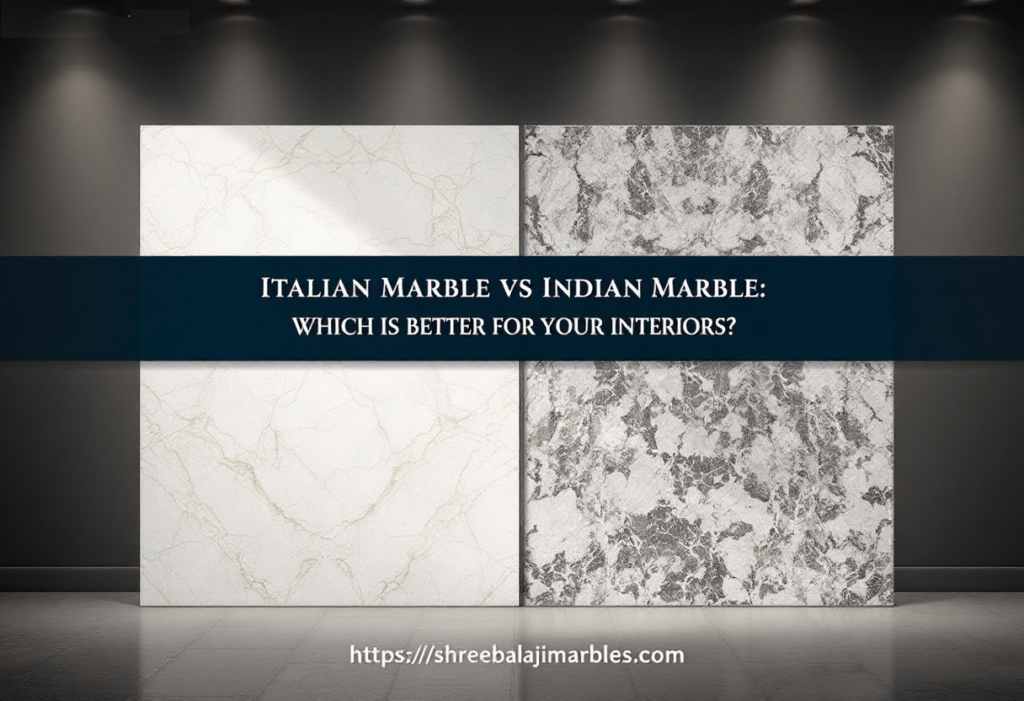
Italian Marble vs Indian Marble: Which Is Better for Your Interiors?
Standing in a showroom, you are faced with two gorgeous selections. Italian marble calls with European elegance, while Indian marble boasts practicality and beauty at a fraction of the cost. It can feel impossible to choose the right marble for interiors when they both look so good.
Marble has been a hallmark of Indian palaces and more modern homes for thousands of years. The natural grain patterns and high gloss finish offer rich elegance to any space. In fact, the estimated size of the global marble market was USD 70.42 billion in 2024, projected to reach USD 92.23 billion by 2030. This market growth indicates marble’s timelessness, East and West, as part of a modern interior.
But which Marble deserves a space in your house? This marble comparison looks at quality, cost, availability, and maintenance. Let’s figure out which selection accompanies your vision best: Italian marble or Indian marble.
Understanding the Origins
Italian marble originates from historical quarries in Northern Italy. Carrara and Calacatta are still the most desirable types around the world today. For thousands of years, these stones starred in iconic Renaissance projects, and continue to provide luxury aesthetic options in modern construction.
Indian marble comes primarily from Rajasthan’s extensive quarrying, and Makrana marble built the Taj Mahal centuries ago and has been a source of pride in India ever since. While origin is an interesting part of the story, does heritage tell us enough to indicate performance?
Quality & Aesthetics Showdown
When it comes to visual appeal, both marbles shine differently. The choice depends on what your project demands.
Italian Marble
Italian marble has a glamorous appearance, with a crystal-like look that captures attention. The finely honed surface polishing allows for lots of natural light reflection when viewed in open space, representing the epitome of paramount locational lighting. The beautiful veining pattern in premium is consistent across the slabs from different batches and creates a design consistency in large projects.
Indian Marble
Indian marble displays natural beauty clearly characterized by a medium lustre, which is suitable for a wide variety of different environments. There is, depending on the other stones available, a wide range of colour options, accommodating both historical and contemporary aesthetic preferences. A variety such as Makrana White can rival Italian varieties in purity and sophistication. Natural grain patterns present beautifully on varieties across the country..
Verdict
Marble from Italy is at the top tier of luxury materials, requiring the utmost clarity. Marble from India provides great versatility of aesthetics for differing projects and budgets. You should decide on marble for interiors based on the overall scope of your project.
Strength & Durability
Italian marble measures 18 to 20mm thick. The softer material may develop small hairline cracks as time goes on. Use a thin nylon sheet backing for added reinforcement. Applying epoxy resins and pigments to both sides is an option to strengthen the marble. One side is pre-polished to conceal the chemical resins.
Indian marble is thicker, about 30mm thick, with great strength for durability. Its thicker material provides a natural strength without needing to add chemical reinforcements. This makes this more resistant to heavier traffic in residential areas.
The Cost Factor
The budget will often dictate which version of marble comes into your home. There is a wide price difference between the types of marble.
With Italian marble being imported from Italy, the price goes up significantly. In addition to the price of the marble, customs processing and transport charges add another 20-30% on top of the base price. Installation will also require the assistance of skilled labor, especially in a patterned floor with intricate inlays.
On the other hand, Indian marble is locally sourced and eliminates any international shipping costs. While labor costs are also more affordable, you can have local craftsmen do a lot more at a readily available cost.
Price Comparison
- Italian Marble: ₹400-₹1,500+ per sq ft
- Indian Marble: ₹150-₹600 per sq ft
Large-scale installations benefit dramatically from Indian marble’s cost-effectiveness. Reliable marble suppliers in India can help balance quality and budget.
Maintenance & Care
Over time, both Italian marble and Indian marble will lose their shine. To maintain the original sheen, both types will require the surface to be polished from time to time, by either carborundum stone or tin oxide. Additionally, any liquid spilled on the marble should be cleaned immediately to avoid staining.
Routine cleaning should consist only of a mild detergent or marble cleaning formula. Marble is soft, and you should never scrub the surface aggressively. Both varieties will require the use of impregnating sealers to help resist staining. This marble comparison shows there is no difference in maintenance upkeep for both varieties.
Availability & Lead Time
Consignments of Italian marble will encounter unavoidable shipping delays and customs delays. Replacement slabs for any repairs may take months to arrive from Italy.
Indian marble is available immediately from quarries in Rajasthan and distributor locations, which retain your project schedule and avoid delays. Trusted marble suppliers in India have inventory available for a reliable replacement.
Best Use Cases
Your space deserves marble that matches its purpose and aspirations. Strategic selection maximizes both aesthetic impact and investment value.
Choose Italian Marble For:
Ultra-luxury villas and penthouses necessitate the crystal-like sophistication of Italian marble. Statement walls and feature walls become discussion points with marble’s trademark veining. High-end hotel lobbies enjoy the prestige of being an international accent. Living rooms instantly gain an authentic European elegance.
Choose Indian Marble For:
Residential projects working under budget have beauty without costing excess money. Large areas requiring flooring are more affordable with the competitive price of Indian marble. High-traffic areas are supported by thicker, more durable options like the 30mm. Solutions suited for the climate are consistently better in a range of climatic conditions across India.
Important Considerations
Both options work great for flooring, wall cladding, and countertops. Do not slide heavy furniture across a marble surface because it will scratch. Also, do not use marble for kitchen countertops because it can stain. Acidic liquids (i.e., vinegar and lemon juice) can cause etching damage.
Hybrid Approach
Savvy designers will use little or nothing beyond Italian marble to punctuate a focal point or entrance, but will make the majority of square footage out of Indian marble because it is perfectly reasonable price-wise. Doing this will maximize an intentional impact just by being intentional about what marble for interiors is used. h h
Conclusion
In this discussion, there is no definite better option. The right winner for you depends on your budget, aesthetic desires, and project scope., Italian marble represents luxury and timelessness with a crystal-like appearance that is known worldwide for its prestige.
Indian marble is practical elegance with incredible value and durability. Each stone has benefits depending on your needs.
At Shreebalajimarbles, we have decades of experience with both Italian marble and Indian marble. We will help you come to the right stone for your dream interiors.